Meeting Notes: Rodrigo Gil Camps director of TNG Arquitectos

''“Public spaces are essential for providing relief from heat, especially for those who don't have private gardens or balconies.”''- Rodrigo Gil Camps

Location: Santiago, Chile

Attendees: 

- Rodrigo Gil Camps director TNG Arquitectos

- Elise van herwaarden, Researcher 

- Jiri Brakenhoff, Researcher

Background

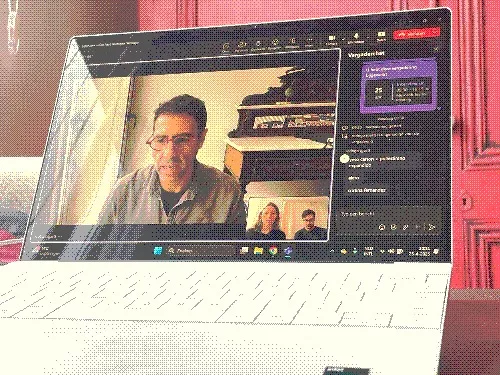
We met with Rodrigo Gil Camps via Teams. We started the conversation by discussing social housing, as earlier that day we had walked past a social housing block in Santiago.

Rodrigo explained that DS19 and DS49 are two housing programmes initiated by the Ministry, both aimed at the development of social housing. He mentioned that more Chilean architects are becoming interested in social housing today. I am also very interested in working on social housing projects.

Living with heat

Q: How have recent heat waves affected life in Santiago, in your experience?

A: Heat waves are increasing, which is something we were already aware of. Chile used to have four very distinct seasons, but now the transitions between them are much less clear. It often feels like we move directly from winter to summer, skipping spring and autumn. I don't have specific numbers, but the change is noticeable. (actie: onderbouwen met data/onderzoek?)

Climate, Density, and Design Decisions

Q: How does Santiago’s climate and urban density shape your design decisions?

A: I built my own house with an air chamber in the roof of 5 centimeters, which worked as a thermal buffer. For about 10 years, it was effective, but in recent years the effectiveness dropped. Now, we often have to use air conditioning too.

I used insulation materials in my house, which is still not very common in Chile. Even though it does not get very cold in Santiago, winters can feel very cold inside houses because of poor insulation.

Building regulations regarding insulation have become stricter, which challenges architects. For example, regulations now limit window sizes, impacting design possibilities. Typically, insulation is applied from the interior, which is easier but less effective in terms of energy efficiency. Common materials include plasterboard.


Tradition and Vernacular Strategies

Q: Are there traditional or vernacular approaches (building forms, materials, urban layouts) that inspire your work today?

A: One important difference from Europe is the use of corridors (courtyards?) everywhere and balconies that create shade. Balconies often serve as in-between spaces, you can close them if needed. Many traditional houses have a pacíos (courtyard spaces) which were used for living and eating. An example is Christian Fernández's 1980s building with a façade designed to control sun entry.

Traditional strategies like extending the roof 70 centimeters on the north façade and using black stone floors that absorb heat are very effective. (specific for this climate: enough sun in wintertime). Vertical shading elements are used especially on east- and west-facing walls to control heat gain.


Design Strategies for Heat Adaptation

Q: What spatial or material strategies do you use to reduce urban heat in your projects?

A: We use shading devices like extended balconies, vertical screens, and strategic roof overhangs. Materials like stone floors are also used because they can store coolness or heat, depending on the season. Insulation is becoming increasingly important.

Q: What design techniques do you apply to minimize heat gain?

A: We focus on passive strategies such as optimizing orientation, shading, and thermal mass. In apartments, shading is critical because they are easy to heat up but are harder to cool.


Social & Cultural Aspects

Q: What cultural habits are originally ways to escape from or deal with the heat?

A: In Santiago, people traditionally open their windows early in the morning when the air is cool and close them by mid-morning (10pm) to keep the cool air inside. There is no strong culture of siesta in Santiago, though it depends on age and lifestyle. In Ecuador or Peru, people tend to wake up very early to take advantage of the cooler morning hours, then avoid the hottest parts of the day. Although Chile has different climates across the country, the cultural habits centered around Santiago influence the whole nation.

Q: Is there a correlation between income and heat exposure?

A: Yes. Higher-income families often have bigger houses with gardens, more vegetation, and air conditioning, which increases comfort.

Q: Is there a different use of public space between different income groups?

A: Yes. In poorer areas, public spaces like street markets are more common and multifunctional not just selling vegetables but other items too. People living in smaller houses are more likely to use public spaces more intensively. so In poorer neighborhoods, people tend to spend more time outside. There is a trend towards smaller apartments (1–2 bedrooms) in the city. In new wealthier areas like Chicureo, people with an income of around $7,000 a month can afford a house; otherwise, most live in apartments.

Q: What role does public space play in offering relief from heat? Does this differ between low-income and high-income areas?

A: Public spaces are essential for providing relief from heat, especially for those who don't have private gardens or balconies. However, in wealthier areas, access to green spaces and shaded private gardens means people rely less on public spaces for cooling.

Project Insights

Q: Can you share examples of projects where you addressed urban heat?

A: In my personal home project, I experimented with increasing ceiling heights to improve airflow and passive cooling.

In apartment projects, we often rely on shading systems and thoughtful orientation. But also insulation and air circulation are becoming more important. It becomes a challenge to hide the air conditioning unit, what can be done for example on the balcony.